
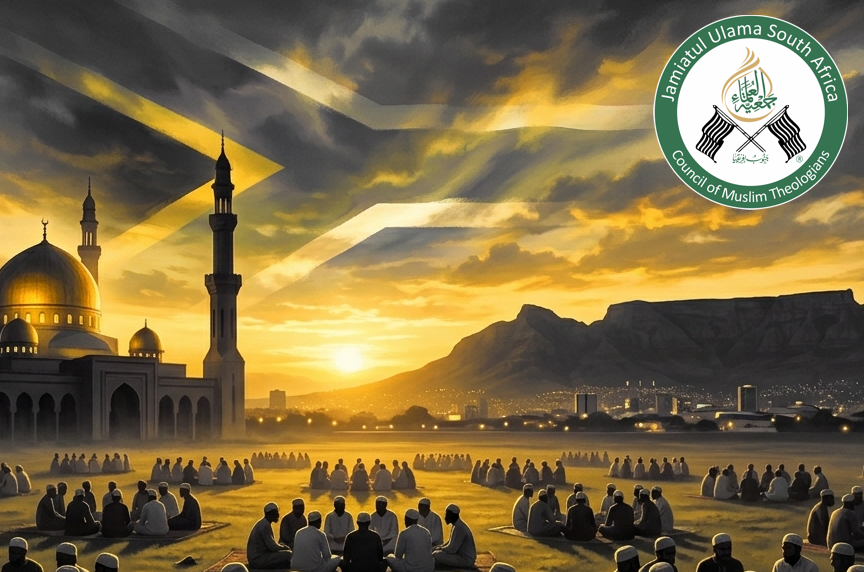
Youth Day Lessons from Ashābul Kahf [Companions of the Cave]
“Verily, they were young men who believed in their Lord, and We increased them in guidance.” (Al-Kahf 18:13)
Today marks the 50th anniversary of the Soweto Uprising, commemorated under the theme “RESET @50 – Our National Commitment to the Future for Freedom Lives in Every Generation.” The youth of Soweto who stood against oppression in 1976 mirror, in a remarkable way, the youth of the Cave who stood against tyranny millennia before them. Both chose principle over comfort; faith over fear, and truth over power.
There are many lessons from the story of Ashābul Kahf whose details in Sūrah al-Kahf are one of the miracles of the Noble Qur‘ān, for the Muslim youth in South Africa today:
- The Primacy of Divine Knowledge and Tawḥīd
History has it that these young men were the sons of rich noblemen in a city, ruled by an arrogant, whose mainstream religion was idol-worship. Yet they were granted pure imān in the Oneness of Allāh — Tawḥīd — and as a result began to withdraw from their people and shun their gatherings.
The first act of their salvation was not a deed but their belief. They knew Allāh. The Noble Qur’ān records their declaration: “Our Lord is the Lord of the heavens and the earth. We will never call upon any deity other than Him.” (Al-Kahf 18:14)
In a world drenched in materialism, saturated with social media idols, obsessed with celebrity culture, and peer pressure, the foundation of correct beliefs is the seeking of the knowledge of Allāh before anything else. The Prophet SAW said: “The best of you in the Days of Jāhiliyyah are the best of you in Islam, provided they have religious understanding.” (Bukhāri & Muslim)
- Youth is a Great Vehicle towards Faith and not an Obstacle to it
From his commentary, Ibn Kathīr states that the People of the Cave were young men, and that they were more accepting of the truth and more guided than the elders of their city who had become stubbornly set in their ways and clung to falsehood. For the same reason, most of those who responded to Allāh’s call delivered through His Messenger SAW were the youth who embraced Islām, as the elders of the Quraysh mostly clung to their disbelief.
Allāh specifically uses the word fityah [youth], in Sūrah Al-Kahf (18:10), honouring their age as an asset, not a liability. The Prophet SAW said: “There is no one whom Allāh will shade on the Day when there is no shade except His shade… a young man who grew up in the worship of Allāh.” (Bukhāri & Muslim)
A person’s young age is not a reason to delay commitment to Allāh. It is the very reason Allāh singles you out for His special mercy. Just as Youth Day honours the courage of students who faced live ammunition for justice, spiritual courage in standing for truth at a young age is generously rewarded by Allāh.
- Courage Against Tyranny — Standing Before Oppressive Power
The youth did not whisper their faith in corners. Allāh says:
“We made their hearts firm when they stood up and declared: ‘Our Lord is the Lord of the heavens and the earth — we shall never call upon any god besides Him; if we did, we would be saying something outrageous.'” (Al-Kahf 18:14)
They proclaimed their faith before a tyrannical king. At their young age, they took a stand before unimaginable figures of authority. They did not merely remain steadfast upon faith once it blossomed in their hearts, they also proclaimed it publicly.
This Youth Day’s commemoration marks the 50th anniversary of the 1976 Youth Uprising — one of the defining moments in South Africa’s liberation struggle. The youth of Soweto stood against an unjust system at mortal cost. The youth of the Cave stood against tyranny at mortal cost. Both teach us: truth must be spoken, even before power. The Prophet SAW said: “The best Jihād is a word of truth before an oppressive ruler.” (Abū Dāwūd, Ibn Mājah)
- Hijrah of the Heart: Withdrawing from Corruption to Preserve Faith
By undertaking Hijrah, the Prophet SAW and his companions left Makkah when they were a small group and returned with an entire force eight years later. Likewise, when the environment became spiritually toxic, the youth made a decisive choice. They fled to the cave saying: “Our Lord, grant us from Yourself mercy and prepare for us from our affair right guidance.” (Al-Kahf 18:10)
Their supplication is comprehensive as an expression of purpose and not just an emotion. They asked for raḥmah [mercy] and rushd [right-guided action].
Often salvation requires one to distance themselves from destructive environments and influence. The reality of growing up is that one can fall into toxic friendships, enticing spaces of vice, substance abuse and outright criminality. When we rely upon Allāh with a righteous action, we are never left alone. Make hijrah from what corrupts your soul, even if the cost is high. Creating a better South Africa of the future will require young people who are alive and awake to their realities, tackling challenges with sobriety, while making choices that protect their faith.
- Rejecting Materialism means regarding Wealth as a Test and not a Goal
These sleepers in the Cave were sons from a class of the nobility of their society, with wealth, status, and privilege. Yet, they forsook it all for Allāh. It is said that one among them, would exchange his beautiful robes when entering the city to buy provisions, with a beggar’s outfit, so as not to draw attention. He surrendered his status entirely for the sake of the mission.
Sūrah al-Kahf is precedes two other stories that reinforce this: the Man with Two Gardens who was destroyed by his arrogance over wealth (18:32–44), and Dhul-Qarnayn who had power over the whole earth yet used it only in service of justice. The Qur’ān places the Cave story first as the foundation. One’s faith must precede considerations for wealth.
In a country of deep inequality, the temptation is either to worship wealth or to be consumed by resentment of its absence. Islām teaches: wealth is not an identity but a trust from Allāh. The Prophet SAW said: “The world is a prison for the believer and a paradise for the disbeliever.” (Muslim) True freedom is independence from material obsession.
- Brotherhood and Collective Faith — Not Struggling Alone
The youth in the Cave faced their trial together and not alone. The Qur’ān emphasises their bond of unity throughout the story. Even the dog that followed them was included in Allāh’s protection. They entered the cave and engaged in devotions for the days and nights, humbly entreating Allāh, together.
From the verse “and We increased them in guidance,” scholars including Imām al-Bukhāri understood that faith can increase; varying in degrees, and that it can fluctuate, suggesting that faith must be nurtured in a community, and not in individual isolation.
A practical step a young person can take today is to find one’s circle of righteous youth to belong to. The Prophet SAW said: “A person is upon the religion of his close friend, so let each one of you look at whom he takes as a close friend.” (Abū Dāwūd, Tirmidhī) Gangs and peer groups have damaging power precisely because humanity as social being are built for community. Youthful energies and power should be redirected towards building communities of consciousness of the Divine [taqwā].
- Tawakkul and Divine Providence
Allāh protects those who surrender to Him. After all their effort, the youth surrendered the outcome entirely to Allāh. Allāh then orchestrated miracles around them: a sleep overcame them lasting not decades but centuries, ensuring all their enemies expired when they awoke. Even the science of their preservation was Divine Intervention. “That was from the Signs of Allāh.”
As South Africa reflects on the significance of 16 June 1976, this 50th anniversary reaffirms the commitment to building a future in which young people are empowered to realise their full potential. But realising potential begins with tawakkul — trusting Allāh completely. Do your part with full excellence, then surrender the result to His Will. The youth of the Cave did everything in their power and then slept. Allāh did the rest for over 300 years.
Conclusion
The youth of the Cave reset their entire world, their status, their city, their comfort and their future, for the Sake of Allāh. This year’s Youth Day theme is “RESET @50 — The Future Calls.” Allāh places this same call before Muslim youth today: reset your priorities, reset your circle, reset your relationship with your Creator.
“Verily, they were young men who believed in their Lord, and We increased them in guidance.” (Al-Kahf 18:13)
May Allāh make the youth of South Africa — and the world — among the Fityah who earn His pleasure. Āmīn.